by: Glenn Lopez with
[7/21/2007 12:15:00 AM]
|
|
Based on
this article, Popular Mechanics
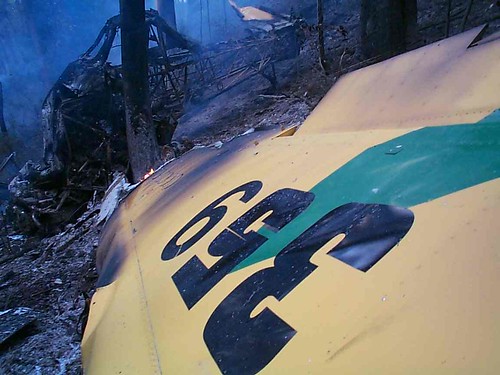
outlined a very important and contriversial topic that I need to debunk as a pilot. They claimed to have gone and studied every American plane crash since 1971 and found that the survival rate for backseat flyers is higher than those in first & business class.
They even go as far as saying:The funny thing about all those expert opinions: They're not really based on hard data about actual airline accidents. A look at real-world crash stats, however, suggests that the farther back you sit, the better your odds of survival. Passengers near the tail of a plane are about 40 percent more likely to survive a crash than those in the first few rows up front.
Those so called 'expert opinions' can't be based on hard facts becuase you have to realise something about how aviation accidents happens before looking at the statistics. You simply can't investigate and plant statistics on an aircrash the same way you do with car crashes... it just doesn't work that way when it comes to aviation.
1) Analyzing previous plane crashes will not predict fatalities or fatality placement (in the cabin) in future plane crashes. Whenever an accident occurs, it is investigated and anything that failed is repaired on all airplanes in service, so most likely that particular kind of failure/accident will not occur again.
2) There are so many variables that occur during takeoff, flying and landing that it is impossible to predict future crashes-and if future crashes could be predicted they would be designed out of the airplane.
3)It is usually not the plane that determines the crash so much as poor weather or human error (such as the case with many mid air collisions).
The truth still remains as a fact, not as a 'myth'. Theres no safe place inside an airplane durring a crash, and any pilot (student to comercial) will tell you the same thing. Luck and chance ditermains your fate durring a plane crash, not where you are seated... its that simple!Labels: all, aviation, debunk, opinion
[Originating Article]
by: Glenn Lopez with
[7/18/2007 10:23:00 PM]
|
|
There was an article I read about a few weeks ago by
Extreme Tech that argues about how the messier the person the more organized he/she actually is. To some degree I agree with this statement so here’s my take on it. Being organized doesn’t necessary mean being clean. It just means that you've created a system for your self to know exactly where everything is and being messy just makes you more productive. Being clean and organized at the same time cuts down on productivity because of the amount of time you spend cleaning and putting everything back to the way it was again. And
having a messy system doesn’t make you less organized than the person next door who spends every second trying to look neat and tidy.
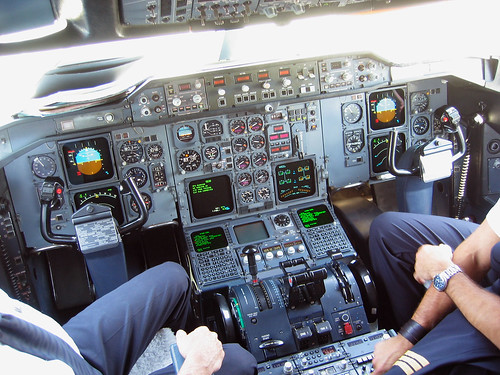
Here’s my example:When I was first starting out as a student pilot at day one, I was overwhelmed with the amount of panels, switches, and gauges even a small airplane had. I had no previous training, no simulator experience so I was clueless and stuffed with fear of never understanding the instrument panels. As my training progressed, I worked hard and began reading up on how these instruments worked, I even went as far as trying to replicate everything on paper, drawing everything little detail on that flight deck from memory and compared it with the actual picture. If I missed, or mispositioned something then I made a promise to start from scratch.
After a few failures I realized something with the way a flight deck was layed out. These instruments weren’t just placed randomly... no, they were actually placed specifically to make logical sense based on their function and how often an instrument is used. This chaotic flight panel is actually grouped in such a way that what every task you had to deal with whether it be navigation or an emergency situation, were so well organized that any one regardless of training could navigate them provided they knew the layouts algorithm.
If you were to look at an A320's flight deck you'd be so overwhelmed with the numbers of buttons and start to wonder... "how do pilots remember where all the buttons are?" and the answer to that is... they don’t. Its all about knowing where to expect the switches and buttons for a specific tast. It may seem chaotic and very messy, but to a pilot its the best way to deal with every demanding task and still be productive during the job.
Now remember what I said earlier... about being clean and organized? Well imagine if a pilot had to deal with that in his/her environment. Imagine being in an emergency situation where the pilot actually had a switch to open a group of other switches... lol sounds ridiculous right? Well that’s because it is. Not only does it take up precious time, but you'll be dead before the pilot can read the next paragraph on that Emergency Reference Handbook.
Most air traffic controllers are actually messy during their job. No, I don't mean they pick their nose and wipe it on the guy next to him to conserve time... I mean the fact that they don't have the time to neatly organize something. They must do it the fastest way possible and the only way to do that is by bieng messy.
Now similarly in a much more miniscule concept such as your work-area, your much less prone to emergency such as the one I described above in fact, I don't recall the last time I heard of a house with a flight deck falling 18,000ft from the sky before. So what’s the correlation here? Simple.. cleanliness will simply make you less productive!
Now this doesn't meen you have to go as far as avoid taking a shower for a few days just to be productive. Its just a general idea you should only apply to your work habit and not your entire life.
Labels: all, aviation, lifeline, opinion, organization, productivity, tips
by: Glenn Lopez with
[7/20/2006 05:36:00 AM]
|
|

Concorde, the supersonic jet airliner was set to revolutionize air travel, but disaster took hold. On 25 July 2000, Air France Flight 4590 is about to take-off from Paris. Suddenly, flames eject from the Concorde's left wing as it rises off the runway. Flight 4590 isn't able to lift its landing gear. 120 seconds later, the disaster ends with a horrific crash into a hotel in nearby Gonesse. 113 people die as a result of the crash. Why did the wing go up in flames?
[Open Video] - Video not working?
Conclusions
The investigators concluded that:
The aircraft was airworthy and the crew was qualified. The landing gear that later failed to retract did not show serious problems in the past. However, despite the crew being trained and certified, no plan existed for the simultaneous failure of two engines on the runway, as it was considered highly unlikely.
The aircraft was slightly overloaded, being about a tonne too heavy.
After reaching take-off speed, the tyre of the number 2 wheel was cut by a metal strip lying on the runway, which came from the thrust reverser cowl door of the number 3 engine of a Continental Airlines DC-10 that had taken off from the runway several minutes before. This strip was installed in violation of the manufacturer's rules.
Aborting the take-off would have led to a high-speed runway excursion and collapse of the landing gear, crashing the plane anyway.
While two of the engines had problems and one of them was shut down, the damage to the plane's structure was so severe that the crash would have been inevitable, even with the engines operating normally.Labels: all, aviation, sfd, show, videos
[Originating Article]





 July 2005


